

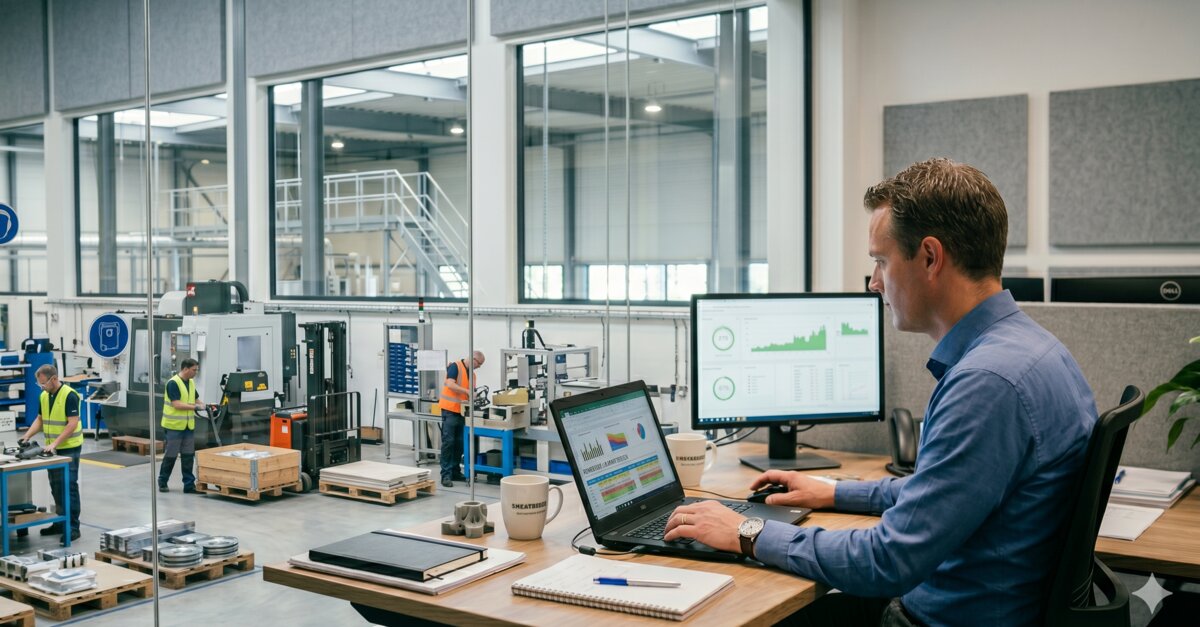
He’s one of the first to arrive every morning. Laptop open, coffee ready, planning in front of him. He knows the orders, the lead times, the capacity. He knows which machine is scheduled where and which customer needs it fast. He does his job thoroughly and he’s been doing it for years.
What he doesn’t know is what was discussed on the shop floor last night.
That machine 4 has been running slower than usual all week. That the maintenance technician told a colleague he “doesn’t trust it.” That there was a sound at startup this morning that wasn’t there last week.
That information isn’t in the ERP. Not in the planning system. Not in an email. It lives in the heads and conversations of the people who operate the machines. And the planner only hears about it when the machine stops.
Two worlds, one company
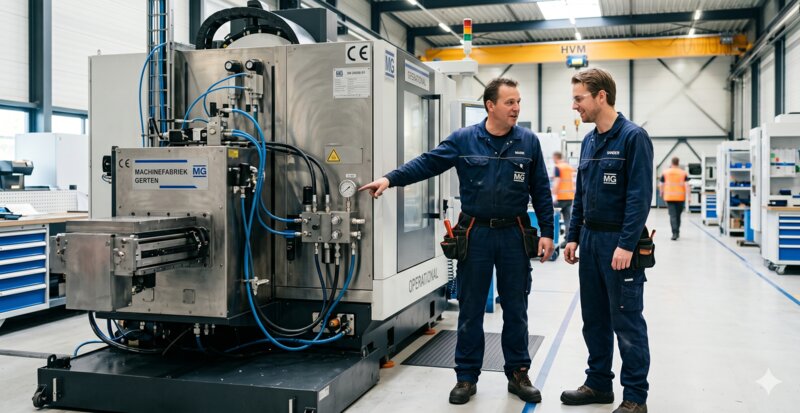
The production planner works with what he has: orders, deadlines, machine capacity, availability of people. That’s his world and he’s good at it. He optimises, shifts, adjusts. Every single day.
The shop floor operates in a different reality. Machines that act up. Parts that wear. Sounds that change. Skilled people who see and hear all of it, but don’t report it anywhere. Not because they don’t want to, but because there’s no place for it to go.
Two worlds in the same building. Both busy. Both skilled. But they don’t share the same information.
It’s not that the planner doesn’t want to know. It’s that nobody tells him. Not out of unwillingness, but because there’s no mechanism for it. There’s no button, no field, no screen where the technician enters: “I’m worried about machine 4.” And even if there were, would the planner notice it between the 200 other lines in his schedule?
What happens when planning and reality don’t meet
The consequences are predictable and recognisable in almost every manufacturing company.
Maintenance clashes with production. The planner schedules a service based on the calendar. Every 2,000 running hours, every six months, whichever comes first. But he doesn’t know that the machine might not last another six weeks. Or that it’s actually running fine and the service could have waited three more weeks, right in the gap between two large orders. The schedule isn’t wrong. It’s just not connected to reality.
Breakdowns come as a surprise. The technician knew. His colleagues knew. But the planner didn’t. The machine goes down in the middle of an order. The week’s planning shifts. Parts are ordered at emergency pricing. Everyone improvises. Afterwards someone says: “Yeah, I saw that coming.” But there was no path for that observation to reach the planner.
The planner becomes reactive without realising it. He thinks he’s planning. And he is, he plans with the information he has. But that information is incomplete. The result is that in practice he’s not planning, he’s reacting. To breakdowns that were avoidable. To delays that someone saw coming. To fires that were already smouldering when he opened his laptop that morning.
This is not the planner’s fault
Let that be clear. The planner does exactly what’s asked of him, with the tools he has. The problem isn’t the person. The problem is the information flow.
In the previous article I described the technician’s side. The skilled worker who sees and hears everything, but whose knowledge is invisible to the rest of the organisation. This article is the other side of the same story.
The technician has the information. The planner has the decision-making power. But there’s nothing in between.
No system, no process, no habit that ensures what the technician knows reaches where the planner plans. The two people who together could make the difference between reactive and proactive maintenance work past each other. Not out of unwillingness. Out of a lack of connection.
It doesn’t start with a big project
The reflex is to think of an entirely new system. A different ERP, a major implementation project, months of lead time. But that’s not where it starts.
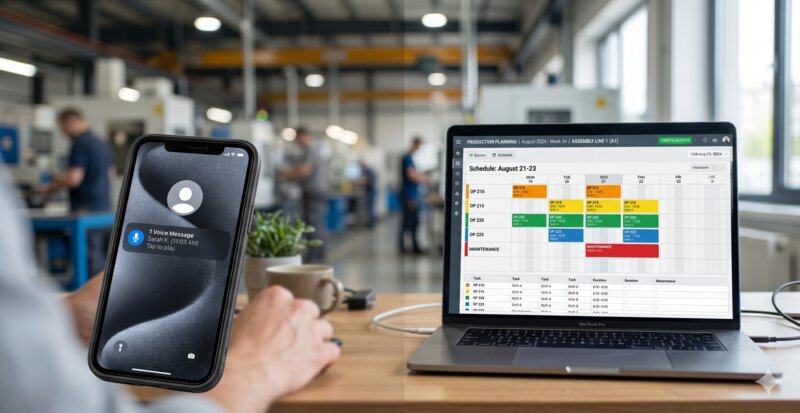
It starts with small, smart connections between what already exists. A technician who reports what he notices via a voice message. A digital translator that picks up that signal, converts it into the planner’s world and puts it on his screen at the right moment. Combined with what the ERP already knows about orders and deadlines, and what the machine portal already reports on condition and running hours.
No large package that everyone needs to learn. No months of implementation. Just making sure the information that’s already there comes together where decisions are made. That’s a different kind of solution than most companies are used to. Smaller, more targeted, and built on what’s already in place.
Two questions for the planner, and two for his manager
For the planner: if a machine goes down this afternoon, could you have known this morning? And if the answer is no: where should that information have come from?
For the director or operations manager: does your production planner know what your maintenance technician knows? And if the answer is no: what is that costing you?
This article and the previous one describe two sides of the same problem. The technician who sees it but can’t pass it on. The planner who doesn’t see it but needs it. Together they form a pattern that’s recognisable in almost every manufacturing company. That pattern, systems that each do their own thing but don’t talk to each other, is what it’s really about.