

There’s a man on your shop floor who can hear a bearing starting to fail from twenty meters away. He knows which pump has been vibrating since last Tuesday. He knows that machine 7 always acts up after a long weekend. None of this is in any system.

This is the reality in most mid-sized manufacturing companies. The most valuable maintenance knowledge doesn’t live in the ERP, the CMMS, or the machine supplier’s portal. It lives in the heads of experienced technicians who have been working with these machines for decades.
And that’s a problem. Not because these people aren’t reliable. They are. It’s a problem because this knowledge is invisible to everyone else. The production planner scheduling next week’s maintenance doesn’t have it. The operations manager deciding whether to postpone a service window doesn’t have it. The only way it travels is when someone walks over and says something.
What the system sees vs. what the mechanic sees
Your ERP knows when the last order was placed. It knows stock levels, delivery dates, and margins. It does not know that pump 3 has been making a different sound for two weeks.
Your machine supplier’s portal (if anyone logs into it) shows operating hours and maybe some temperature readings. It does not know that your technician has been watching a specific vibration pattern because he saw the same thing before a failure three years ago.
Your maintenance schedule says this machine is due for service in six weeks. Your mechanic knows it won’t make it that long.
Three systems. Three different views. None of them has the full picture. The only person who does is the one walking the floor.
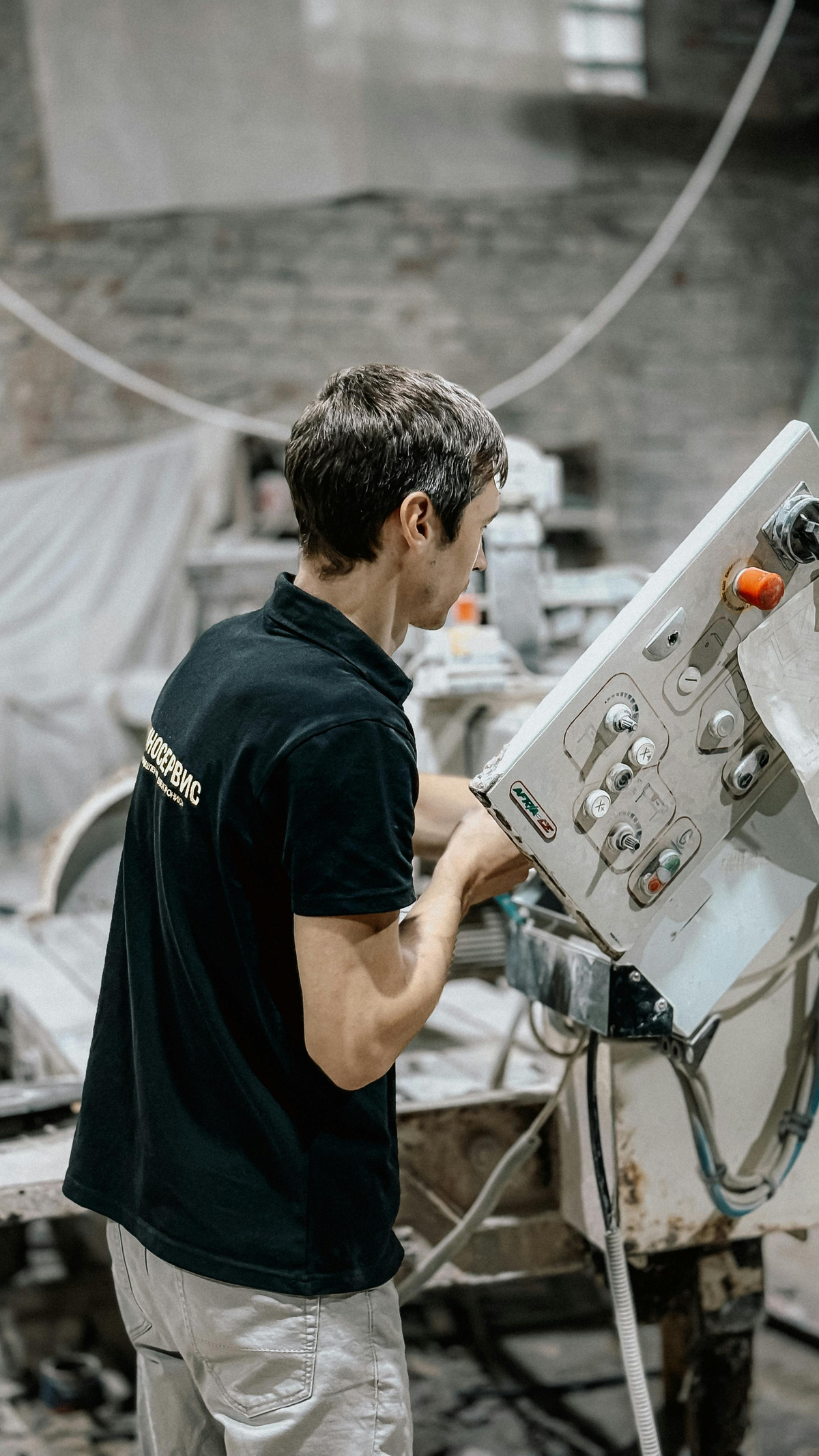
The cost of invisible knowledge
When knowledge lives only in someone’s head, three things happen.
Reactive maintenance becomes the default. Not because the company chose it, but because the system doesn’t have enough information to do anything else. The mechanic may know something is off. But if there’s no way to flag it in the planning system, it doesn’t exist for the production planner. And the planner has his own problem. He’s making decisions based on incomplete information every single day. He just doesn’t know what he’s missing. The breakdown happens. A shift is lost.
Maintenance happens at the wrong time. Preventive maintenance follows fixed schedules. Every 2,000 hours. Every six months. Regardless of actual machine condition. Research consistently shows that around 30% of parts replaced during scheduled maintenance still had significant useful life left. That’s waste in parts, and waste in the downtime needed to replace them.
Knowledge walks out the door. Workforce growth in mid-sized European manufacturing has flatlined. The Metaalunie barometer for Q4 2025 confirms it. Headcount growth has come to a complete stop. The generation that carries this implicit knowledge is retiring. In many companies, what they know has never been written down, let alone made searchable.
Industry experts from the Mikrocentrum Techcafé sessions put it bluntly. “Companies collect and store everything, but use very little of it.” The data that is captured is often raw machine data with no context. The context (what matters, what to watch for, what a specific reading means for this particular machine) is in the mechanic’s head.
This is not a technology problem
It’s tempting to frame this as a case for sensors, AI, or a new platform. But that misses the point.
The first step isn’t buying technology. The first step is connecting what already exists.
Most manufacturing companies already have more information than they realize. The ERP has production data. Machine suppliers deliver data through portals. There are maintenance logs. Sometimes digital, sometimes on paper, sometimes in someone’s memory. The Fieldlab CAMPIONE in the Netherlands, which works specifically with mid-sized manufacturers on smart maintenance, found that companies are consistently surprised by how much data they already have available.
The gap isn’t data. The gap is that nobody has connected these sources into a single view that both the maintenance team and the production planner can use.
The reactive vs. proactive divide
The difference between a reactive and a proactive maintenance operation isn’t the amount of technology deployed. It’s whether the knowledge that exists (in systems, in portals, in people’s heads) is connected and actionable.
A reactive operation waits for failures, then scrambles. Parts are ordered at emergency pricing. Production schedules are disrupted. The mechanic is called in to fix what they warned about weeks ago.
A proactive operation looks different. And not because it requires the mechanic to start using a computer.
The mechanic still walks his rounds. He still hears the bearing. He still knows which pump is acting up. The difference is that there’s an easy way for that observation to land where it matters. A voice memo on his phone. A quick message in an existing group chat. Something that fits how he already works, not a new system he has to learn.
That signal then shows up where the production planner makes decisions. Combined with what the ERP already knows about the schedule, and what the machine portal already reports about operating hours and temperatures. The planner doesn’t need to call the mechanic to ask what’s going on. The information is already there.
This doesn’t require replacing what already works. It requires building a thin layer between the people who have the knowledge and the people who make the planning decisions.
Three questions worth asking
Can your production planner see what your maintenance technician is worried about?
If your most experienced technician left tomorrow, how much of what they know would stay?
And: if the mechanic noticed something right now, is there a way for that to reach the planning without anyone having to walk over and interrupt someone?
If those answers make you uncomfortable, you’re not alone. Most mid-sized manufacturers are in the same position. The awareness is there. The connection isn’t. Yet.
This post is about the mechanic’s side of the problem. But there’s another side. The production planner who has to make decisions with half the picture. Who schedules maintenance based on a fixed calendar because there’s nothing better available. Who finds out about a machine problem when it’s already too late. That’s the other half of this story. More on that soon.
Photos by Hanna Alves and Bulat369