

Every system in your company was bought to solve one problem. And it does.
The ERP tracks orders and inventory. The planning tool schedules production. The machine supplier’s portal shows uptime and temperatures. Time registration records hours worked. The quoting tool knows what the estimate was. The maintenance system, if there is one, knows when the last service was done.
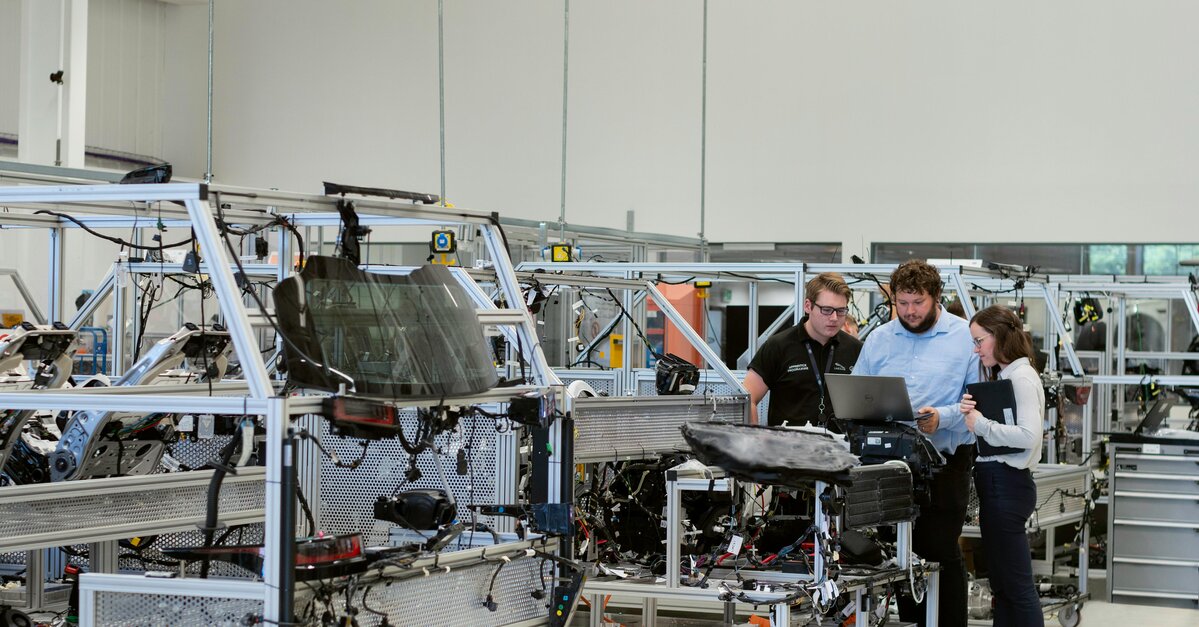
Every system does its job. But none of them know what the others know.
The space between
What sits between the systems is air. There’s no owner. No one responsible. No budget. And that’s where information disappears.
The consequences are familiar. Someone in the office opens three screens to answer a simple question. Someone on the shop floor calls planning to ask if an order has priority. The production planner doesn’t know that maintenance is scheduled for next week, because that lives in a different system. The estimator doesn’t know how many hours were actually spent on a job, because time registration was never linked back to the quote.
Decisions are made based on what people remember or what they picked up somewhere. Not because they choose to, but because the alternative, finding out what’s actually happening, is too much work.
This isn’t unique to manufacturing
I’ve seen this pattern in every sector I’ve worked in. In financial services, transactions sat in one system, client data in another, risk models in a third. Everyone knew it could be better. Nobody had the time or the mandate to actually connect things.
In healthcare, I saw patient records, scheduling, procurement and quality registration living side by side. People on the floor who needed to know something had to piece it together from two or three systems, or they did it from memory.
In aerospace, where I started, it was no different. In large, complex simulation projects, teams from three or four organisations worked together. The information was there. But between the systems, there was air.
It’s not that the people in those organisations weren’t working hard. Quite the opposite. It’s something else. Systems are bought to solve one problem. Then they start living their own life. And nobody is responsible for what falls between them.
Three faces in manufacturing
In a factory or workshop, the consequences of this pattern are tangible. They have three different faces.
On the shop floor. Downtime that nobody can precisely quantify. A machine that everyone knows breaks down often, but where no pattern has been traced because the fault log sits in a notebook, a spreadsheet, or someone’s head. Maintenance that comes too early one time and too late the next. For companies with serial or batch production, this is often the most urgent face.
In the costing. For companies that work to order, the problem often sits one step earlier. The quote is based on an assumption. The workshop solves things along the way that weren’t in the drawing. At the end, the invoice goes out. And then the question: does what we earned match what we expected to earn? In most companies, the answer is: we don’t really know. Time registration sits in one system, material usage in a second, the original estimate in a spreadsheet that was never opened again.
In the knowledge. This face is the least visible, but in the long run the most consequential. In many manufacturing companies, the real understanding of the work, which machine can handle what, how to fixture a difficult part, where the pitfalls are in the process, sits in the heads of a handful of experienced people. Industry bodies report that workforce growth in European SME manufacturing has stalled. The knowledge that currently sits in people’s heads could be gone in five or ten years. Not because nobody wanted to record it, but because there was no system or process that made it possible.
The numbers confirm the pattern
The Trends in Manufacturing 2026 report by ECI, based on a survey of over 300 European SME manufacturers, paints a clear picture. 84% of companies are in an early phase of digitalisation or connecting systems. But 47% say they see no measurable results yet.
So there’s something going on between the data that’s available and what actually comes out of it in practice.
McKinsey researched in early 2025 why digitalisation fails to deliver results at many companies. The most important predictor of success turned out not to be the chosen technology. It’s the willingness to rethink work processes. Less than 10% of digital applications make it past the pilot phase.
The problem isn’t that companies have too few systems. The problem is that nobody has connected the existing ones.
It doesn’t have to start with a new system
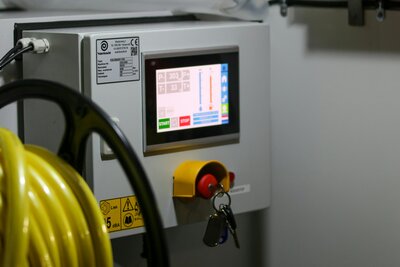
Fieldlab CAMPIONE, a national centre of expertise for smart maintenance in the Netherlands, has developed a logbook that helps companies inventory what data is already present in their organisation, before investing in additional sensors or equipment. Their experience is that most companies are surprised by how much data they already have.
Smart Industry offers a free Smart Industry Assessment: two sessions, trained advisors, nine steps towards a smart factory. No sales pitch, no technology push. Just a structured look at where you stand and what’s already there.
The first step isn’t buying something new. The first step is knowing what you have.
Questions I would ask myself
If I were the director of a manufacturing company, these are the questions I’d want to sit with for a moment. Not to answer them immediately. More to notice which ones make me uncomfortable.
Which three machines, processes, or order steps cause the most disruption in our production? Is that recorded somewhere, or does it sit in the head of one or two people?
Of the work we did last year, do I know precisely which orders actually earned us what we invoiced for them?
If the three most experienced people in my company left tomorrow, how much of their knowledge is preserved in a way the rest of the organisation can work with?
Between our key systems, where do people manually transfer information from one to another? And what could I know if that transfer happened automatically?
The more of these questions you answer with ‘I don’t actually know’, the greater the chance that there’s information in your company you can’t currently see, but that is valuable.
Photos by ThisIsEngineering and Freek Wolsink